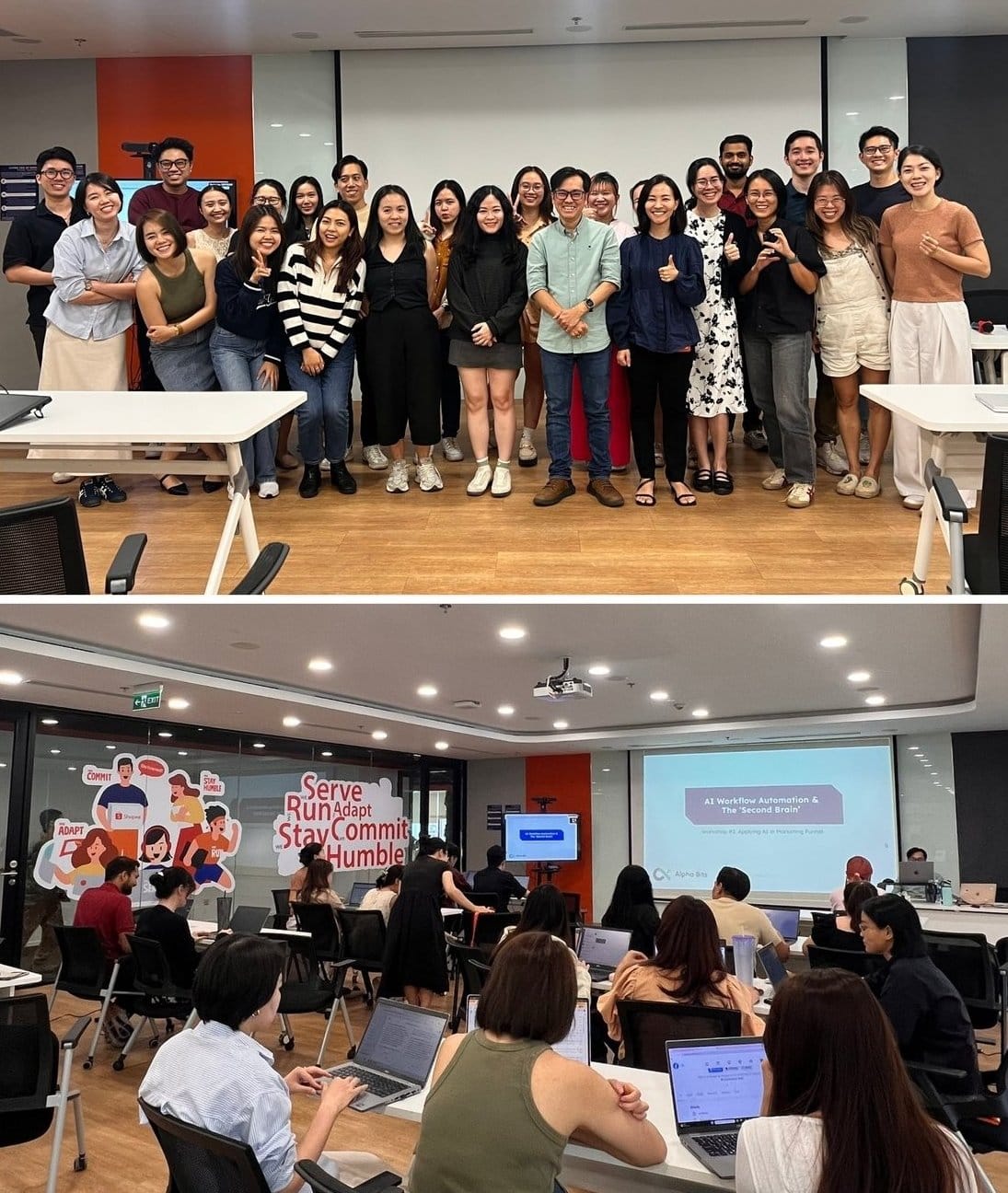
In early 2026, we ran an AI Workflow Automation workshop for a group of operational leaders from the Shopee team. Our pre-workshop survey turned up something we didn't expect. Most participants used AI every day, but they were held back by what we started calling "data paralysis." The blocker they cited most often was waiting for BI data exports, and many said they lost 5 to 10 hours a week to repetitive admin work. To find internal policies, they relied on tribal knowledge: pinging colleagues in chat groups or digging through Drive folders by hand.
We split the training into two phases, with the aim of moving them from copy-pasting AI answers to building workflows.
Phase 1: the Data-First Principle
Workshop 1 covered the Data-First Principle: AI is only as good as the context you give it. We showed how to build a central "Second Brain" in NotebookLM by pulling scattered SOPs and project trackers into one shared knowledge base they could query. The aim was to stop relying on chat searches and make the team's institutional knowledge searchable.
We also showed them how to skip the BI queue by using AI to reverse-engineer their own complex trackers and produce executive summaries on the spot. When a 3-day BI request was replicated in 10 minutes, the looks on their faces were worth the whole workshop.
Phase 2: from systems to automation
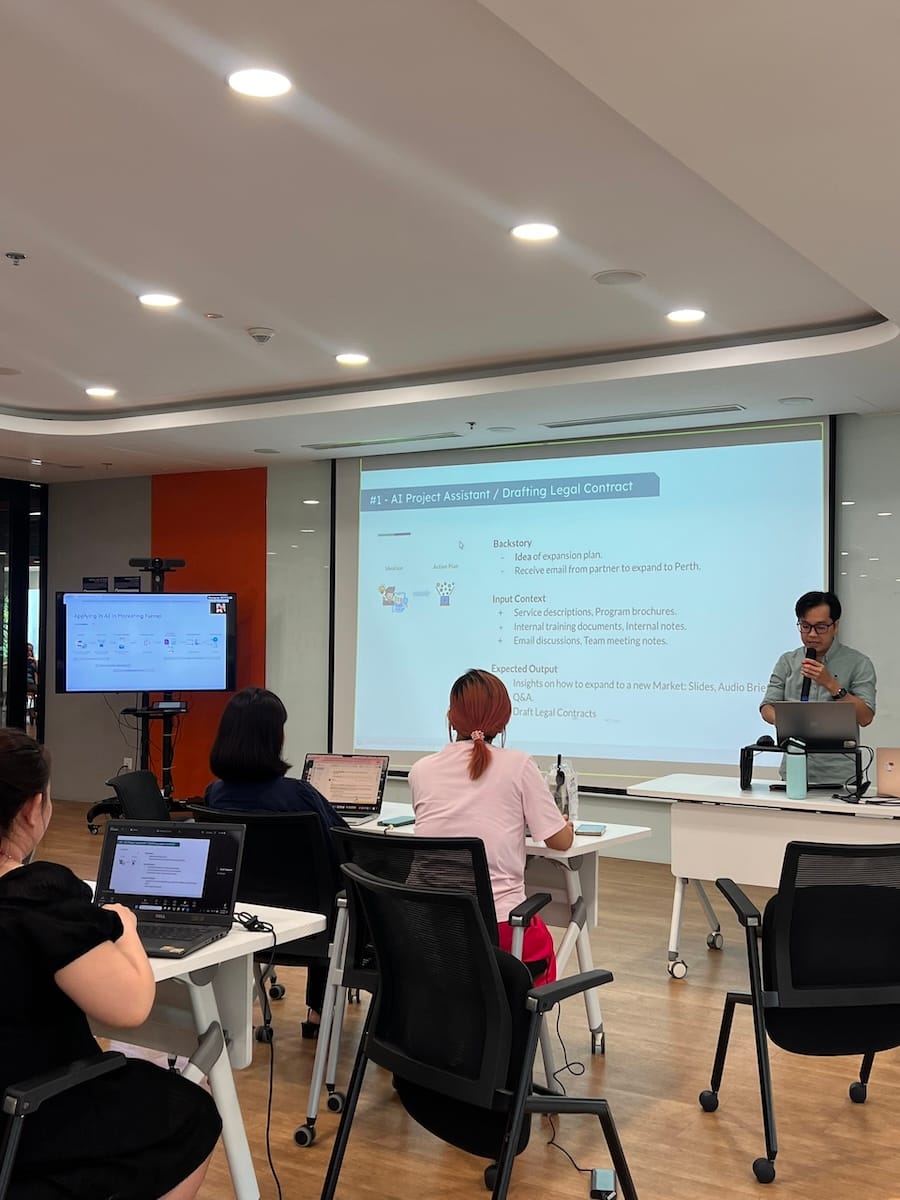
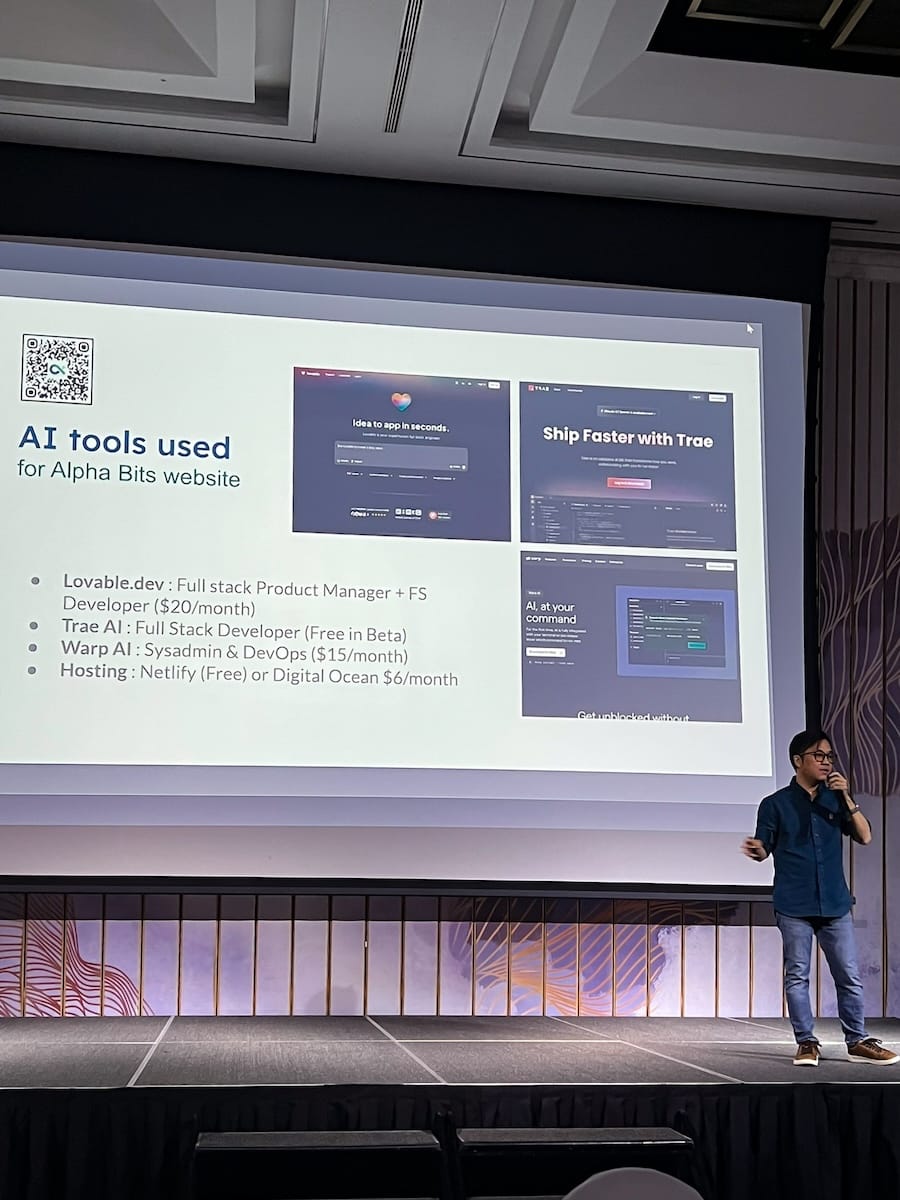
Workshop 2 applied these systems to the marketing funnel. We started with rapid prototyping, using tools like Google AI Studio and Lovable.dev to deploy website prototypes in minutes and skip the usual design, spec and dev cycle. Then we moved on to no-code CRM automation, connecting Google Forms to Node-RED and Telegram so that leads were classified and sales teams notified as soon as a form came in.
What surprised us
By the end of Workshop 2, these leaders had gone from pasting ChatGPT outputs into spreadsheets to building pipelines that classify leads with no manual effort.
What stayed with us most was how fast their questions changed. In Phase 1 they asked, "How do I prompt better?" By Phase 2 they were asking, "Can I connect this to our internal system?" Getting people from prompting to building was the reason we ran the workshop.
If we ran it again, we'd spend even more time on Phase 1. Some participants found the data organisation step tedious at first, yet every one of them named it as the most valuable part in their feedback forms. The dull foundation work turned out to be what made the automation stick.
We share our workshop frameworks and materials on the Alpha Bits blog. If you're building something similar for your own team, our Data-First Principle Thinking post covers the framework in detail.